

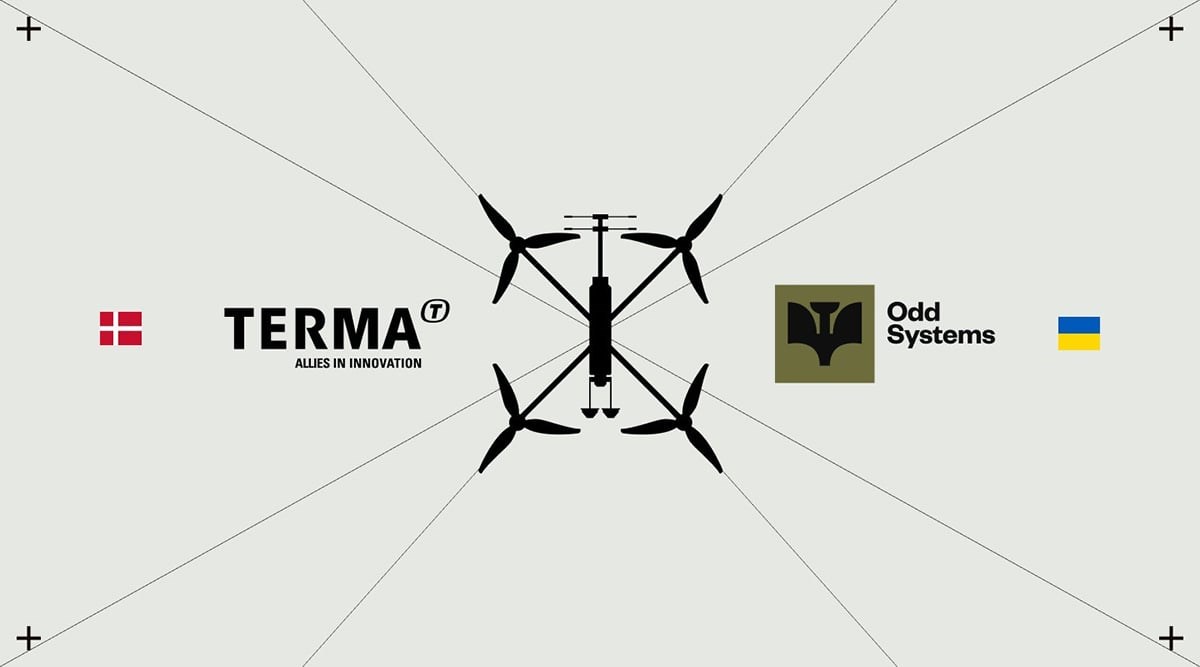
In a significant move for European defense, Denmark’s Terma Group and Ukraine’s Odd Systems have announced a strategic partnership to co-develop a new generation of low-cost, autonomous drone interceptors. The collaboration aims to merge Western technological sophistication with battle-hardened Ukrainian innovation to address the growing threat of hostile unmanned aerial systems.
Terma, a major defense contractor with expertise across air, sea, land, and space domains, will contribute its advanced sensor technology and systems integration know-how. Odd Systems, a Ukrainian manufacturer renowned for its frontline drone and thermal camera systems, will provide its combat-proven drone platforms. The joint goal is to create an interceptor capable of autonomously identifying, tracking, and neutralizing a wide spectrum of aerial threats, from small FPV and commercial drones to larger fixed-wing and long-range models like the Shahed.
Filip Rensch-Jacobsen, Vice President at Terma, emphasized the strategic value of the alliance. “Partnering with Odd Systems is the most effective path forward. They have demonstrated an unparalleled ability to innovate under extreme pressure, delivering robust capabilities at a pace and cost that redefines the market. By integrating our best-in-class technology with their agile, combat-adapted platforms, we can rapidly advance the future of air defense,” he stated.
The partnership reflects a broader shift in defense architecture, where drones are treated as modular platforms similar to traditional fighter aircraft. Terma brings decades of experience from programs like the F-16 and F-35 to this new domain, focusing on the critical role of integrated mission systems.
Yaroslav Azhnyuk, co-founder of Odd Systems, highlighted the collaboration’s importance for regional security. “We are thrilled to work with the dedicated professionals at Terma. This cooperation is vital for building a safer European sky, free from intruding drones. Such Ukraine-EU partnerships are crucial for the future security of the continent,” Azhnyuk said.
This alliance marks a concrete step towards a more agile, resilient, and interconnected European defense landscape, directly responding to the evolving nature of modern warfare.
